Sunday, 17 June 2012


Aside from enjoying all kinds of snacks in Taiwan, you also should not miss the special delicacies of each area. These products often come with gift packaging service, which is convenient for travelers who want to take them home as gifts for friends and relatives.
Although Taiwan is small, there is a wide variety of products which it has made uniquely its own. These not only make fine gifts for friends and relatives, but they also allow you to take home a true piece of Taiwan.
|
 |
| |||

With a reputation of being a tea empire, Taiwan has topography and climate that are perfect for growing tea plants. There are many varieties of tea available in Taiwan; among these, Wenshan Baozhong Tea, Dongding Oolong(Wulong) Tea, Pekoe Oolong(Baihao Wulong) Tea, and Tie Guanyin are the four mainstream teas.
You can pick up virtually any type of teapot in department stores or tea stores. If you want to buy a piece of porcelain culture aside from having a teapot to boil tea in, go to Yingge, the ceramics capital of Taiwan. Yingge's Jianshanpu Rd. is a newly designed pedestrian area, and the whole shopping area provides various types of porcelain products. This is the best place to buy your teapot and have a look around.
Major department stores and supermarkets have special stalls that sell tea, which makes this national beverage readily available. Besides, there is also the tea bag, a simple and convenient way to enjoy a cup of tea.
| |||
|

.gif)
| |||

Taiwan's most famous place for peanut brittle is the small island of Kinmen. Because of Kinmen's fresh air, good water quality, rich soil, and windy weather conditions, the peanuts produced here are superior to those produced anywhere else. The peanuts are cooked in malt sugar and left to cool and harden. Then the result is cut into small bars, wrapped, and packaged in gift boxes or plastic bags.
| |||
|
| |||
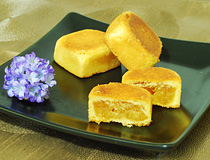
Pineapple is widely grown here in Taiwan, which is also known for producing canned pineapple, pineapple drinks, and pineapple jams. Pineapple is also made into pineapple cake, with the pineapple's sweet and sour taste mingling with the loose, soft outer skin that seems to melt in your mouth; definitely worth giving it a taste... and more!
| |||
|
| |||

The water quality of the Ailan Plateau, located on the western side of Puli Township, Nantou County, is pure and sweet. Because of the water's unique qualities, it is considered the primary "Shaoxing wine spring." Made by fermenting glutinous rice, Penglai rice, wheat, and other ingredients, the golden yellow Shaoxing wine has a dry, sweet taste.
Kinmen, with its hot, dry weather and unpolluted environment, is the best place to make Gaoliang spirit. Thanks to excellent water quality, the Gaoliang produced here is superior in quality and fine in taste.
In Matsu, with the uniqueness of the local spring water, brews such as Daqu, Gaoliang, and Matsu Old Wine are most popular. Clear ruby-colored Matsu Old Wine is not just a favord drink on Matsu, but is also widely used in Chinese cooking.
| |||
|
| |||
A variety of flavors are produced when plums, kumquats, mangoes, and other fresh fruits are rubbed with salt and preserved by adding sugar. Basically, the salty flavors of preserved fruits come from the salt rubbed on them, the sweet taste comes from the sugar, and the sourness is a result of fermentation. People in Taiwan call these preserved fruits "salty, sour, and sweet," which is an appropriate moniker for their unique taste.
| |||


|





Saturday, 16 June 2012
Daring Bakers July: Swiss Roll
I have to admit there was a sharp intake of breath as I checked out the Daring Bakers’ challenge for July. A “Swiss Swirl Icecream Cake” inspired by this:
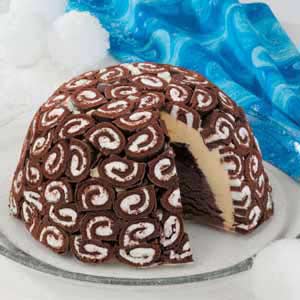 (photo courtesy of the Taste of Home website)
I was kind of half expecting there to be a Jello layer in there somewhere! And weirdly, it reminded me of a wig.
The July 2010 Daring Bakers’ challenge was hosted by Sunita of Sunita’s world – life and food. Sunita challenged everyone to make an ice-cream filled Swiss roll that’s then used to make a bombe with hot fudge. Her recipe is based on an ice cream cake recipe from Taste of Home.
Mandatory:
1. You must make the Swiss rolls, a filling for them, two ice creams and a fudge sauce, from scratch.
2. You must set the dessert in a bowl/pan etc in the order given in the recipe-Swiss roll, first ice-cream, the fudge topping and, finally, the second ice cream.
2. You must set the dessert in a bowl/pan etc in the order given in the recipe-Swiss roll, first ice-cream, the fudge topping and, finally, the second ice cream.
Ok, you probably know already that I am all about the challenge. The challenge of learning new techniques, that is, and for me, the technique I decided to focus on out of this five-part challenge was the actual swiss roll.
A Swiss Roll? Never made that and always wanted to = perfect. I searched high and low for a “no fail” sponge cake and finally settled on a recipe from Gourmet (January 2001). My notes in red below.
Chocolate Swiss Roll
INGREDIENS:
For The Sponge Cake:
9 eggs, separated - room temperature
90g plain flour
5 tablespoons cocoa power
180g sugar + 4 tablespoons sugar extra - superfinex
3 teaspoons vanilla extract
Chocolate Butter-cream Icing:
250g butter – room temperature
250g icing sugar
6 tablespoons cocoa power
2 teaspoons vanilla extract
1 tablespoon milk - optional
DIRECTIONS:
Making The Sponge Cake:
Preheat the oven to 180°C and same time ready your baking tray with a greased parchment paper. (I used the baking tray which is inside the oven)
Sift the flour and cocoa power together for 3 times, keep it aside.
Beat the egg yolks for nearly 5 minutes and then add flour-cocoa mix, vanilla & sugar in three additions. Beat the mixture until it’s pale and thickened. Keep the mixture aside.
Then in another clean, dry bowl beat the egg whites until it firm peaks form. Should be like snow...
Now it’s time to mix the both mixtures together.
Fold the egg whites into egg yolks mixture and with a spoon or rubber spatula mix it into a one side, until the whole mixture is light chocolate colour.
Pour the mixture into the prepared baking tray, and bake it for 15 - 20 minutes or until a toothpick comes out clean.
When the cake is baking in the oven, lay another parchments paper on the table and sprinkle the 4 tablespoons castor sugar on the paper.
After the baking time is over, take the cake from the oven and put it on the sugared paper. Carefully peel off the parchment paper which was in the baking tray.
Using the sugared baking paper, now lift the end of the cake & roll it while the cake is hot. (Paper should be inside the cake, just like an icing)
Cover it with the paper, and let it cool completely. (Nearly 1 1/2 - 2 hours.)
Making The Chocolate Butter-cream Icing:
Sift the icing sugar & cocoa power together for 3 times, keep it aside.
In a bowl beat the butter until it’s creamy, add the milk and beat it again.
Then little by little add icing sugar – cocoa mix and beat it until you get a creamy mixture.
Cover it and keep it aside.
Making the Swiss Roll:
Now take the cake, which is cooled completely. Carefully unroll the cake and spread the chocolate butter-cream icing on the cake evenly.
Now again carefully roll the cake neatly but tightly.
After you roll the cake, just cover it from sides, just like a toffee.
Refrigerate the cake for nearly 2 hours.
Then you can remove the parchment paper, and roll the Swiss Roll on a cling film.
SERVING:
For a tea party or for a get-together you can serve Swiss roll. Even for normal day, evening tea time.
NOTE:
1. If you get granulated sugar, just grind it in a grinder for few minutes, and you will get superfine/castor sugar. (I’m doing like that.)
2. When the egg whites are in peaks form, if you upside down the mixture it won’t fall.
3. Remember to scrape down the sides of the bowl often when you are beating.
4. Get the help of the parchment paper for the first turn, in second rolling.
5. Keep the Swiss roll in the refrigerator.
ENJOY!!!
For The Sponge Cake:
9 eggs, separated - room temperature
90g plain flour
5 tablespoons cocoa power
180g sugar + 4 tablespoons sugar extra - superfinex
3 teaspoons vanilla extract
Chocolate Butter-cream Icing:
250g butter – room temperature
250g icing sugar
6 tablespoons cocoa power
2 teaspoons vanilla extract
1 tablespoon milk - optional
DIRECTIONS:
Making The Sponge Cake:
Preheat the oven to 180°C and same time ready your baking tray with a greased parchment paper. (I used the baking tray which is inside the oven)
Sift the flour and cocoa power together for 3 times, keep it aside.
Beat the egg yolks for nearly 5 minutes and then add flour-cocoa mix, vanilla & sugar in three additions. Beat the mixture until it’s pale and thickened. Keep the mixture aside.
Then in another clean, dry bowl beat the egg whites until it firm peaks form. Should be like snow...
Now it’s time to mix the both mixtures together.
Fold the egg whites into egg yolks mixture and with a spoon or rubber spatula mix it into a one side, until the whole mixture is light chocolate colour.
Pour the mixture into the prepared baking tray, and bake it for 15 - 20 minutes or until a toothpick comes out clean.
When the cake is baking in the oven, lay another parchments paper on the table and sprinkle the 4 tablespoons castor sugar on the paper.
After the baking time is over, take the cake from the oven and put it on the sugared paper. Carefully peel off the parchment paper which was in the baking tray.
Using the sugared baking paper, now lift the end of the cake & roll it while the cake is hot. (Paper should be inside the cake, just like an icing)
Cover it with the paper, and let it cool completely. (Nearly 1 1/2 - 2 hours.)
Making The Chocolate Butter-cream Icing:
Sift the icing sugar & cocoa power together for 3 times, keep it aside.
In a bowl beat the butter until it’s creamy, add the milk and beat it again.
Then little by little add icing sugar – cocoa mix and beat it until you get a creamy mixture.
Cover it and keep it aside.
Making the Swiss Roll:
Now take the cake, which is cooled completely. Carefully unroll the cake and spread the chocolate butter-cream icing on the cake evenly.
Now again carefully roll the cake neatly but tightly.
After you roll the cake, just cover it from sides, just like a toffee.
Refrigerate the cake for nearly 2 hours.
Then you can remove the parchment paper, and roll the Swiss Roll on a cling film.
SERVING:
For a tea party or for a get-together you can serve Swiss roll. Even for normal day, evening tea time.
NOTE:
1. If you get granulated sugar, just grind it in a grinder for few minutes, and you will get superfine/castor sugar. (I’m doing like that.)
2. When the egg whites are in peaks form, if you upside down the mixture it won’t fall.
3. Remember to scrape down the sides of the bowl often when you are beating.
4. Get the help of the parchment paper for the first turn, in second rolling.
5. Keep the Swiss roll in the refrigerator.
ENJOY!!!
Pancakes recipes
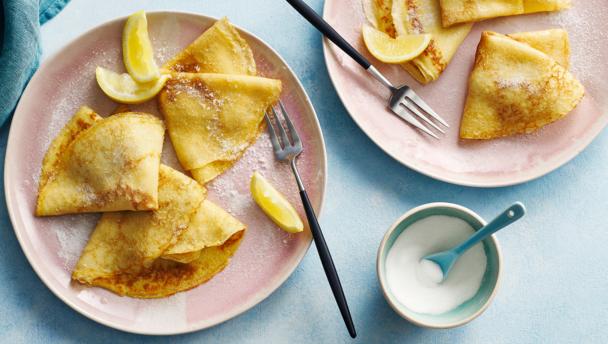
Basic pancakes with sugar and lemon
By Delia Smith
We have a glorious list of delicious pancake recipes, whether you enjoy them once a year in February or you're a regular on Saturday morning. The humble pancake is made from a batter of milk (or milk and water), eggs and flour which is then cooked in a frying pan or on a griddle until golden brown on both sides. You can buy special pancake pans which are shallow and non-stick with curved sides. French pancakes are made slightly thinner and are called crêpes. Scotch pancakes are small and thick, usually cooked on a griddle and sometimes flavoured with sultanas or raisins. American pancakes are normally served at breakfast. They tend to be light and fluffy, served in generous stacks with bacon and maple syrup. There is also the Russian blini, Chinese pancakes served with Peking duck, Italian crespelle and so on. Pancakes are traditionally eaten in the UK on Shrove Tuesday.
Subscribe to:
Comments (Atom)